
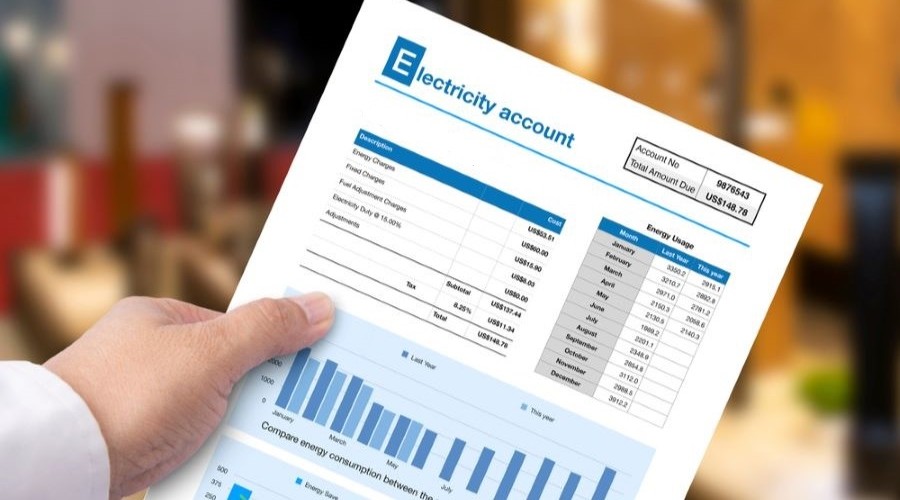
Electricity is becoming a more expensive operating requirement for businesses across the United States. New data from the U.S. Energy Information Administration shows that commercial and industrial customers paid more for each kilowatt-hour of electricity in May 2026 than they did one year earlier.
The increase comes at a time when many organizations are already managing higher costs for labor, insurance, materials, maintenance and contracted services. For property owners, manufacturers and facility operators, electricity expenses can therefore have an increasingly significant effect on operating margins.
Commercial and Industrial Rates Move Higher
The EIA calculates average electricity prices by dividing utilities’ retail electricity revenue by the amount of power sold. Although this figure is not the same as the specific tariff charged to an individual customer, it provides a useful measure of broader pricing trends.
Commercial electricity averaged 13.54 cents per kilowatt-hour in May, representing a 4.7% increase from May 2025. Industrial customers paid an average of 8.71 cents per kilowatt-hour, up 5.1% year over year.
Electricity consumption also increased in both sectors. Commercial sales rose 3.4%, the largest increase among the customer categories tracked by the EIA. Industrial sales increased 1.9%.
The combination of higher prices and greater consumption can produce a substantial increase in total utility spending. The effect is particularly important for energy-intensive operations and facilities that require extensive air conditioning, refrigeration, lighting, machinery or around-the-clock service.
Electricity Increases Were Widespread
The upward movement was not confined to a few markets. According to the EIA, 44 states and the District of Columbia recorded higher average electricity revenue per kilowatt-hour than in May 2025.
Across all customer categories, the national average reached 13.83 cents per kilowatt-hour, an increase of 5.3%. Total retail electricity sales rose 2.4% during the same period.
These figures demonstrate why comparing a current utility bill only with the previous month may not provide a complete picture. Seasonal changes, rate adjustments, demand charges and fluctuating consumption can make it difficult to determine whether an increase is justified—or whether an account contains avoidable expenses.
Higher Rates Make Utility Oversight More Valuable
Businesses cannot control every change in electricity pricing, but they can take steps to ensure they are not paying more than necessary.
A comprehensive utility review can examine whether an account is assigned to the appropriate rate schedule, whether meter readings and billing calculations are accurate, and whether taxes, fees and demand charges have been applied correctly. Reviewing historical usage can also reveal unexplained spikes, inefficient operating patterns or recurring charges that warrant further investigation.
For commercial properties, apartment communities, hotels and industrial facilities, even a seemingly modest rate increase can create a meaningful annual expense when applied across substantial electricity consumption. Organizations with multiple locations face the additional challenge of monitoring numerous accounts, service classifications and billing structures.
As electricity costs rise, utility bill and service auditing should be viewed as an ongoing cost-control practice rather than a one-time response to an unusually high invoice. Regular reviews can help organizations identify billing errors, recover eligible overpayments and uncover opportunities to reduce future expenses.
The latest EIA figures reinforce a straightforward business reality: when the price of every kilowatt-hour increases, understanding exactly how an organization is being billed becomes more important.
Source: U.S. Energy Information Administration, Electricity Monthly Update