

It’s been more than 20 years since a Florida city last broke away from a major investor-owned electric utility to form its own. Now, two Gulf Coast cities may be considering the same path.
The St. Petersburg City Council just voted to approve a study examining whether it makes financial sense to end its 30-year power agreement with Duke Energy Florida. Just north of the city, Clearwater is also conducting a similar review as its own long-term deal with Duke comes up for renewal this year.
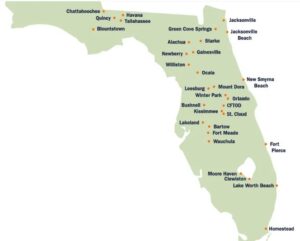
The most recent Florida city to establish a municipal utility was Winter Park, near Orlando, in 2005. Today, there are 33 municipal utilities in the state—including Orlando, Jacksonville, Lakeland, Fort Pierce, Lake Worth Beach, and Homestead—serving about 14% of Florida’s population, according to the Florida Municipal Electric Association.
Why St. Petersburg And Clearwater Are Reconsidering Duke Energy
Although there is no certainty either city will leave Duke, rising electricity costs are driving renewed interest in local control. Residents have increasingly complained to officials about higher utility bills amid a broader affordability crisis.
According to the municipal association, Duke Energy residential customers paid the highest electric rates in Florida from May 2025 to April 2026. Average monthly bills for 1,000 kilowatt-hours are about $161.93 for investor-owned utilities, compared with roughly $130 for city-run systems. With St. Petersburg’s franchise agreement with Duke set to expire on Aug. 1, city leaders see an opportunity to evaluate alternatives instead of automatically renewing a 30-year contract.
“This is our opportunity,” said Council Member Richie Floyd, who supported the study. “I would like to see us do everything we can to look at all our options.”
The $590,000 study will be conducted by NewGen Strategies and Solutions, a Texas-based consulting firm. A similar study for Clearwater found potential savings of 7% on electric bills in the first five years, increasing to 18% over time. Duke Energy disputes those projections, arguing they do not fully account for upfront costs such as acquiring equipment, substations, and utility infrastructure. The company is seeking to renew its long-term agreement with St. Petersburg.
“Duke Energy believes renewing the franchise agreement offers immediate benefits to our customers and communities we serve,” said spokeswoman Ana Gibbs.
Support And Opposition To “Dump Duke”
The St. Petersburg vote to approve the study was narrowly split, 4–3, reflecting deep disagreement over the idea of leaving Duke Energy. Opponents cite financial risks, especially as potential property tax changes could strain city budgets.
“This is something we can’t afford right now,” said Council Member Gina Driscoll. “Who knows how bad it’s going to get.”
At a packed council meeting, supporters and critics of the so-called “Dump Duke” effort voiced competing concerns. Some residents criticized Duke’s guaranteed profit margin of around 10% under its current arrangement. Others emphasized the utility’s ability to respond to major outages, particularly during hurricanes and other severe weather events. Officials also noted the complexity of creating a municipal utility from scratch.
“We have to build a company. A massive power company,” said Council Member Mike Harting. “We have to build this team from scratch.”
How Municipal Utilities Operate In Florida
Cities that choose to operate their own utilities face major logistical challenges, often requiring them to develop or contract entire power systems. For example, Lake Worth Beach purchases electricity through long-term market contracts and distributes it directly to residents, while Jacksonville’s JEA operates as a large, community-owned utility overseen by an independent board.
However, municipal utilities can face their own controversies. In 2019, a major corruption scandal at JEA—reported by the Florida Times-Union—led to federal fraud and conspiracy charges against executives involved in a secret bonus plan.
Florida’s Major Utilities
Duke Energy currently serves about 2.1 million customers in Florida, primarily in the west-central region. Florida Power & Light, the state’s largest utility, serves roughly 6 million customers, or about 12 million people. Municipal utilities collectively serve about 1.6 million homes and businesses statewide. Many trace their origins to World War II-era efforts to expand electricity access during fuel shortages.
Source: Tallahassee Democrat