
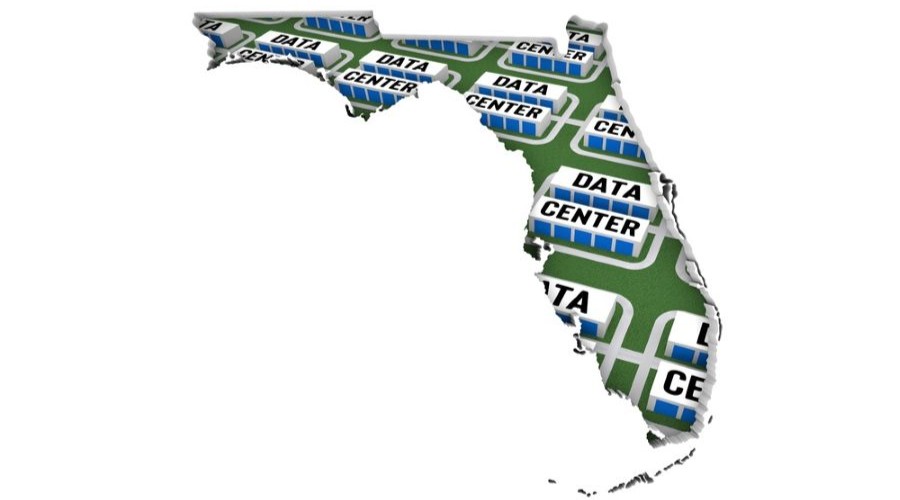
Florida’s new law regulating large-scale data centers has officially taken effect, but lawmakers from both parties say additional safeguards may still be needed.
The legislation includes consumer protections and gives local governments the authority to reject proposed data center developments in their communities. However, both Republican and Democratic leaders argue the measure does not fully address concerns surrounding the rapid expansion of AI-related infrastructure.
“What we don’t want to do is be subsidizing or putting a thumb on the scales for technologies that are going to supplant the human experience,” Gov. Ron DeSantis said last December.
The law, signed by DeSantis and effective July 1, has drawn criticism from lawmakers across the political spectrum.
“I think that there is no law that can go strong enough against data centers,” said Republican Chief Financial Officer Blaise Ingoglia.
State Sen. Carlos Guillermo Smith, D-Orange County, acknowledged the legislation is imperfect but said it represents a meaningful step forward.
“Ultimately, this was about having no data center regulations, or at least some protections for consumers,” Smith said.
One of the law’s key provisions requires major technology companies to pay the costs associated with developing and operating large data centers, preventing those expenses from being passed on to utility customers.
“Ratepayers and consumers like you and me will not have to front the cost of any of these data centers,” Smith said. “These facilities have really impacted energy bills for consumers in other states.”
Smith joined 31 other state senators in voting for the bill, although he said the Florida House weakened several provisions before final passage. According to Smith, future legislative sessions should focus on increasing transparency around data center development.
“Earlier versions of this bill would have prohibited local governments from signing non-disclosure agreements with data center companies,” Smith explained. “That transparency measure would have helped communities gain access to important information.”
Concerns about data centers are already surfacing in Central Florida. In Eatonville, residents have questioned how the expansion of HostDime‘s facility could affect local electricity demand, water usage, and noise levels.
The Wymore Road facility, which also serves as the company’s corporate headquarters, is not dedicated to artificial intelligence. Instead, it provides traditional data storage and server hosting services.
Meanwhile, Lake County commissioners have approved a one-year moratorium on new data center projects while officials study their potential impact on electricity consumption and water resources.
“We have beautiful rural areas and then we have these awesome small downtowns,” Lake County Commissioner Anthony Sabatini, R-Lake County, recently told WESH 2. “We don’t have a huge industrial corridor.”
Ingoglia said he believes Florida should not encourage additional data center development.
“They want our tax dollars,” Ingoglia said. “They want our energy. They want our water. Then they want our labor to build a data center on a short-term basis, all so they can create AI to take our jobs. I don’t get it.”
Source: WESH2 News